Radiation Therapy for Prostate Cancer
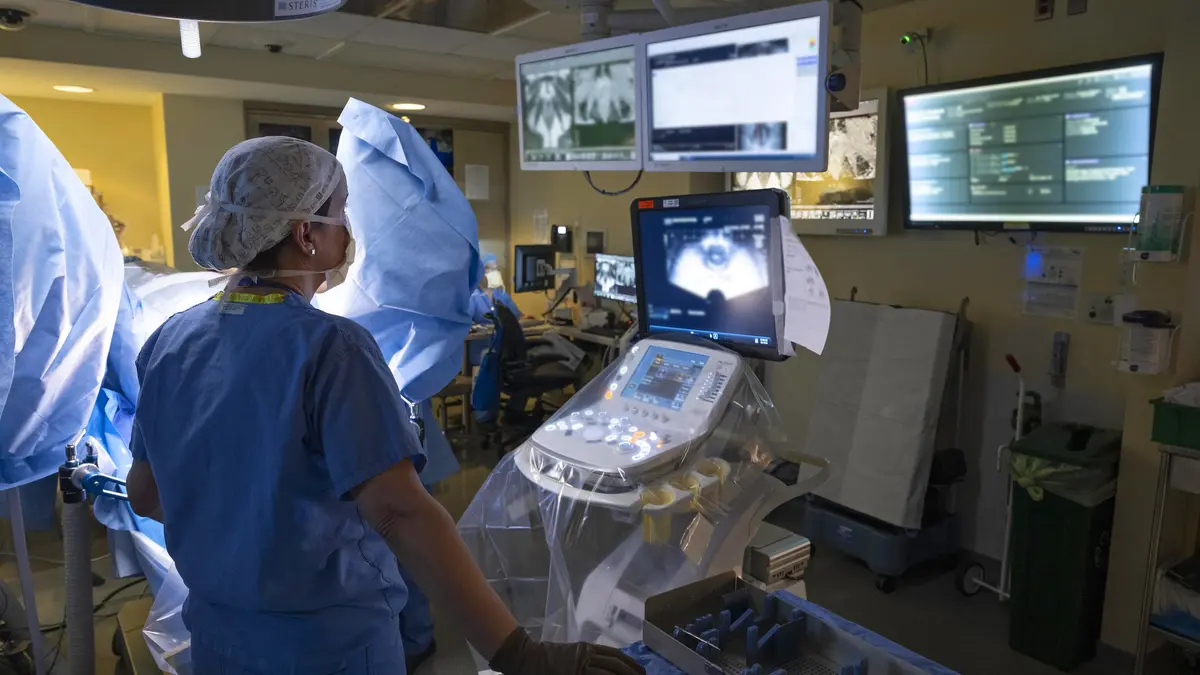
MSK radiation oncologist Dr. Marisa A. Kollmeier during a prostate image-guided brachytherapy procedure.
Overview of prostate cancer radiation therapy
Radiation therapy works by using high-energy X-rays or radioactive sources to kill cancer cells or tumors. MSK offers precise radiation therapy that kills prostate cancer cells with fewer side effects from radiation. This keeps the healthy tissue safe.
You may have radiation therapy for prostate cancer on its own or with hormone therapy. Some people have radiation therapy after surgery if prostate cancer came back or cancer spread to other areas.
To understand how prostate cancer radiation therapy fits into your treatment, this is a good place to start.
Talk with an MSK Care Advisor. We're here 24 hours a day, 7 days a week.
How is radiation therapy used to treat prostate cancer?
Your doctor may recommend radiation therapy for prostate cancer that’s only in your prostate or has spread.
The prostate cancer may be in an area that makes it hard to fully remove with surgery. That’s because your prostate is close to tiny nerves and near your bladder.
Radiation oncologists are cancer doctors with special training in using radiation to treat cancer. MSK’s radiation therapy experts deliver radiation to the tumor while keeping nearby healthy tissue safe. Radiation therapy aims to kill off prostate cancer cells with as few side effects as possible.
Prostate cancer may not respond to other treatments, such as surgery or hormone therapy. If so, we use radiation therapy to relieve symptoms and improve your quality of life.
MSK is one of only a few hospitals that offers all types of radiation therapy to treat prostate cancer. Our experts use external radiation, seed implants, or both. We’re experts in all options and will create a treatment plan that’s best for you.
Types of prostate cancer radiation therapy
There are 2 basic types of prostate cancer radiation therapy, internal and external.
External radiation therapy is delivered from outside your body. This type of prostate cancer radiation uses high-energy rays to harm cancer cells so they can no longer grow.
External beam radiation therapy (EBRT) is the most common type of prostate cancer radiation. It uses a treatment machine called a linear accelerator to aim beams of radiation right at the tumor.
The beams pass through your body and harm cancer cells in their path. You will not see or feel the radiation.
Most energy rays used for EBRT are photons (X-rays). Another type of EBRT is proton therapy, which uses proton rays.
MSK uses EBRT to treat tumors inside the prostate and cancer that has spread to other areas.
Internal radiation therapy is when we put something, such as radioactive seeds, inside your body very close to the tumor. Internal radiation is also called brachytherapy (BRAY-kee-THAYR-uh-pee).
External radiation therapy
Stereotactic body radiotherapy (SBRT) is ultra-hypofractionated (HY-poh-FRAK-shuh-NAY-ted) radiation therapy for prostate cancer. MSK’s SBRT treatment is called MSK Precise.®
SBRT delivers more precise, higher doses of radiation than older forms of radiation therapy. SBRT lets you return to your daily life faster because of the shorter treatment schedule.
SBRT for prostate cancer takes 5 treatments over about 10 days. It has very low rates of problems with incontinence (leaking urine) or sexual health. MSK has used rectal spacer procedures to protect the rectum since 2015 and does more than any other hospital.
SBRT is guided by advanced imaging, including MRI and PSMA PET imaging.
Intensity-modulated radiation therapy (IMRT) hypofractionated radiation therapy. IMRT lets us change the radiation beams’ power during treatment using a special computer program. It lets us make a dose plan that can give high doses of radiation more precisely to the tumor area.
IMRT is so accurate that it can have fewer prostate cancer radiation side effects than older radiation methods. You’ll have an MRI or CT scan before IMRT to make a 3D map of the tumor.
Your prostate can move a little during or between treatments. Before radiation, we often put a few gold markers in the prostate so we can track the prostate’s movement. This makes treatment more accurate.
MRI-guided radiation therapy is the most accurate way of imaging the prostate before and during radiation treatment. At MSK, we use a radiation treatment machine that has an MRI imaging unit on the treatment table.
With such clear MRI tumor images, your doctor can tell if they should use higher radiation doses on certain areas.
Your doctor can see the prostate and nearby organs and adjust for movements of your prostate, bladder, or rectum. Your doctor can react on the spot and adapt your prostate cancer radiation therapy during each session.
CT-based adaptive radiation therapy uses a special CT scan right before treatment. Treatment software lets your doctor adjust the treatment plan based on changes in the tumor and normal organ movements.
MSK is one of only a few hospitals to offer the most advanced proton therapy in New York City. MSK uses proton therapy, also called proton beam therapy, for some cases of prostate cancer.
Proton therapy uses charged particles called protons to kill cancer cells. A device called a cyclotron sends tiny, high-energy beams of protons to the tumor.
With proton therapy, the beams do not go past the tumor. Healthy tissue near the tumor has less radiation exposure.
Internal radiation therapy
Brachytherapy (BRAY-kee-THAYR-uh-pee) is internal radiation therapy.
Brachytherapy for prostate cancer can be an ideal way to treat prostate cancer that came back after other radiation therapy.
MSK doctors were among the first to offer this form of treatment. We have the country’s busiest brachytherapy program, with a suite just for this procedure.
Brachytherapy uses sealed radioactive material placed close to or inside the tumor. The radiation does not travel far from the radioactive material. Brachytherapy lets the tumor get a radiation dose while nearby healthy tissue gets little or none.
You’ll have prostate cancer brachytherapy at the hospital, in our brachytherapy suite. You’ll have anesthesia (medicine to make you sleep).
You can go home the same day. Most people can go back to work in 1 or 2 days.
- Low dose rate brachytherapy takes 1 to 2 hours.
- High dose rate brachytherapy takes 1 or 2 treatments, each about 15 minutes. If you need a second treatment, it will be on another day.
High dose rate (HDR) brachytherapy: HDR often is used to treat early or advanced prostate cancer. You may also have image-guided IMRT (IG-IMRT) for prostate cancer or SBRT after brachytherapy
HDR uses 1 very strong radiation source that we place into the prostate for only a few minutes.
You'll have anesthesia, medicine to make you sleep. Then you'll have a procedure to place needles into your prostate. The needles attach to tubes that deliver the radiation source into your prostate. Next, you’ll have your HDR treatment.
We remove the radiation source, tubes, and needles after treatment.
Low-dose rate (LDR) brachytherapy: We place metal seeds about the size of a sprinkle inside the prostate.
You'll have anesthesia, medicine to make you sleep. Next, you’ll have an ultrasound. The images help your doctor guide needles through your skin and into your prostate. In the operating room, your radiation oncologist and care team make a treatment plan.
Based on this treatment plan, they’ll put 40 to 70 radioactive seeds inside your prostate. Radioactive material is inside each seed. It gives off radiation that slowly gets weaker, then stops.
The seed stays safely in your prostate. You’ll get a few radiation safety tips to follow.

Theranostics
Theranostics (THAYR-uh-NAH-stiks) is a form of radiation therapy. Theranostics is delivered as a systemic therapy that uses therapy and diagnostic tools. It uses targeted imaging molecules to find cancer cells. Then those same molecules deliver radiation right to those cells.
Theranostics both finds and treats cancer.
Theranostics is a new treatment for prostate cancer that:
- Spread beyond the prostate.
- Does not respond to hormonal and other types of systemic therapies.
Theranostics therapy is most often used for advanced prostate cancer.
How does theranostics work?
Cancer cells can have a protein on their surface called prostate-specific membrane antigen (PSMA). Theranostic agents can find and attack cells with PSMA.
These special radioactive substances are called radioisotopes, tiny particles that give off radioactive energy.
There’s no better place to get theranostics than MSK:
- We helped discover PSMA
- We developed imaging based on PSMA
- We helped develop treatment based on PSMA
MSK co-led clinical trials that developed a treatment called 177Lu-PSMA-617 (Pluvicto®). This molecule attaches to PSMA with radiation that kills the cancer cell.
You may have a PSMA-based imaging scan only. This helps us see the cancer cells more clearly.
What is PSMA PET to diagnose prostate cancer?
Theranostics diagnoses prostate cancer by using a new way of taking images.
MSK experts were leaders in developing a new imaging technology called a PSMA PET. This new scan uses a radioactive molecule that attaches to prostate-specific membrane antigen (PSMA).
The PSMA PET scan lights up the PSMA on cancer cells. PSMA PET lets us clearly see cancer that’s metastatic (spreading) and needs treatment. We can find the prostate cancer cells sooner than older imaging technologies.
For example, standard bone imaging only shows damaged bone, not the cancer. Often, it finds cancer only after it already has harmed the bones.
Similarly, CT scans and other imaging methods only spot large areas of cancer in other tissue types. By then, the cancer already has grown enough to harm normal tissue.
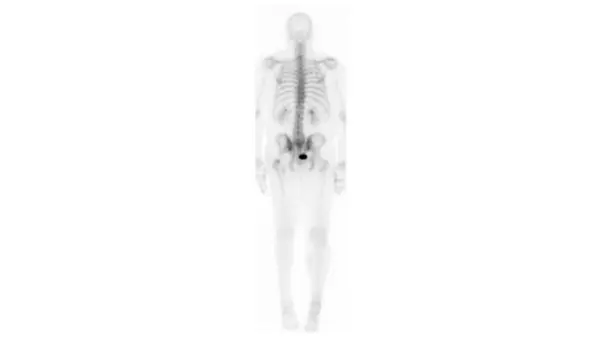
A bone scan shows no cancer in bones. This man was scheduled for surgery that would not have cured him.
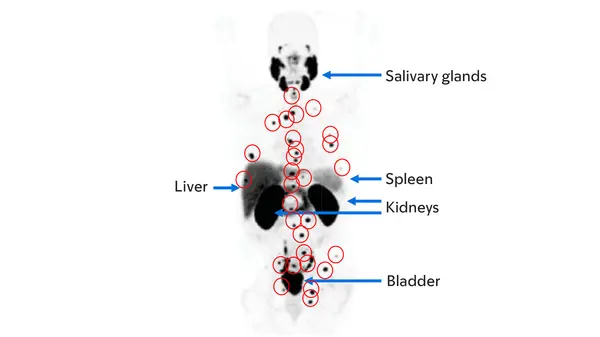
A PSMA PET scan of this man shows metastatic prostate cancer all over his body that the bone scan missed.
What is PSMA PET to treat prostate cancer?
Theranostics for prostate cancer can also treat the prostate cancer. We replace the radioactive material we used to diagnose and find the cancer with one that can kill cancer.
The PSMA PET shows if there’s enough PSMA to make the cells respond to treatment.
At MSK, everyone gets a PSMA PET scan if:
- They’re at risk for getting metastatic prostate cancer.
- The cancer came back after treatment.
-
Early-stage prostate cancer
-
Later-stage prostate cancer
-
Metastatic prostate cancer
-
After a prostatectomy
MSK is among the country’s first academic institutions with a laboratory just for making alpha-emitting radiopharmaceuticals to treat cancer. Our new lab in Manhattan is testing a type of radioactivity called alpha emitters, a radiopharmaceutical that’s the most powerful form of theranostics.
Side effects of prostate cancer radiation therapy
What are the short-term side effects of radiation therapy for prostate cancer?
Radiation treatments are very precise and cause little harm to healthy tissues. Radiation for prostate cancer does not cause hair loss and many people report few lasting side effects.
In general, you can keep doing your daily activities or keep working through treatment.
Some people do have side effects during or shortly after prostate cancer radiation. Short-term prostate cancer radiation side effects include:
- Skin irritation.
- Fatigue (feeling very tired).
- Need to urinate more often than normal.
- Need to urinate at night more often than normal.
- Feel like you need to urinate right away.
- Urinary incontinence (leaking urine).
- Diarrhea (loose or watery poop).
- Mucus leaking from your anus (the opening of your rectum where poop leaves your body).
What are the long-term side effects of radiation therapy for prostate cancer?
Prostate cancer radiation side effects can start months or years after radiation treatment ends. These are called long-term or late effects.
Radiation therapy for prostate cancer can cause permanent urinary and bowel changes. These are changes in how you pee and how you poop that do not go away.
Late side effects can be like the ones you had during treatment. There’s a very small chance you may get other side effects, including.
- The opening of your bladder can get narrower. You may have trouble urinating (peeing).
- You can have urinary incontinence (leaking urine).
- You can have blood in your urine (pee) or stool (poop).
- You can have bleeding from your rectum.
- Your rectum can be injured.
- You may need to poop more often.
- You may get inflammation (swelling) in your legs or around the testicles.
- Erectile dysfunction (ED): It’s hard to have or keep an erection.
- When you ejaculate, the amount or thickness of your semen is different. Ejaculation is when semen comes out of your penis after reaching orgasm (an intense feeling of pleasure).
- Your orgasms do not feel the same as before.
- You may not ejaculate when you have an orgasm.
Our Integrative Medicine and Wellness Service offers acupuncture, meditation, massage therapy, yoga, and exercise. Integrative medicine is also called complementary, natural, or holistic therapies. Without using prescription drugs, integrative therapies can help improve and control side effects of cancer treatment.
Our advanced practice providers (APPs) are very experienced in caring for people who had prostate cancer. They’re trained in making follow-up care plans after radiation therapy, and work closely with your radiation oncologist. They’ll guide you to the support you need, such as rehabilitation and exercise.
Common questions about radiation therapy for prostate cancer
Before radiation therapy, you’ll have a treatment planning procedure called a simulation. It’s done so that:
- Your treatment site is mapped so the radiation is precise and targeted.
- You get the right radiation dose.
- Nearby tissue gets the least amount of radiation possible.
Your simulation takes about 1 to 2 hours. You’ll have a magnetic resonance imaging (MRI) scan to help plan treatment. You may also have a CT scan.
We’ll mark your skin with tiny tattoo dots about the size of a freckle. This helps us position you for treatment. These tattoos are permanent (do not come off).
You’ll have follow-up appointments with your doctor or advanced practice provider (APP).
Your radiation therapy care team will tell you how often to have follow-up visits.
During these visits, you may have blood tests, such as prostate-specific antigen (PSA) tests. You may have imaging scans or biopsies. These procedures can help find any late side effects that happen 4 months or longer after radiation therapy.
Before your appointment, it’s helpful to write down questions you want to ask. Here are some examples. Write down the answers during your appointment so you can review them later.
- How will radiation to my pelvic area make me feel?
- What kind of radiation therapy will I get?
- How many radiation treatments will I get?
- What side effects should I expect during my radiation therapy?
- Will these side effects go away after I finish my radiation therapy?
- What kind of late side effects should I expect after my radiation therapy?
- What kind of follow-up care will I need after radiation therapy ends?
