Prostate Cancer Active Surveillance Program

Physician assistant Nicholas Romano is on MSK’s team of experts who closely watch for signs of prostate cancer.
Overview of MSK’s Prostate Cancer Active Surveillance Program
Surveillance (ser-VAY-lents) means monitoring or watchful waiting. Active surveillance is an option for some people with prostate cancer. Prostate cancer monitoring is not the same as having no treatment.
We may recommend active surveillance to treat:
- Low-risk prostate cancer
- Intermediate-risk prostate cancer
Not all prostate cancers are the same. Some grow fast. Others grow slowly and are less likely to metastasize (spread) to areas outside the prostate. This is called low-risk prostate cancer.
Other prostate cancers are a little more likely to grow and spread. This type is called favorable intermediate-risk prostate cancer. Active surveillance is an option for some people with intermediate-risk prostate cancer.
What is active surveillance for prostate cancer?
Active surveillance is a treatment for slow-growing prostate cancer. Monitoring prostate cancer helps people avoid these side effects of surgery or radiation therapy:
- Urinary incontinence (trouble holding in your pee)
- Rectal bleeding
- Erectile dysfunction, or ED (when it’s hard to get or keep an erection)
We may recommend active surveillance for prostate cancer that grows slowly. If so, you may decide to enroll in active surveillance after your first visit with your urologist. This is a doctor with special training in the genitourinary (jeh-nih-toh-YOOR-ih-nayr-ee) (GU) system, including the prostate.
The MSK active surveillance care team is led by urologic surgeon Dr. Behfar Ehdaie and advanced practice providers (APPs).
APPs are healthcare providers who have special training and work alone or with Dr. Ehdaie to care for you. Examples of an APP are a nurse practitioner (NP) and a physician assistant (PA).
When prostate cancer active surveillance may be the right treatment for you
Your healthcare provider may recommend prostate cancer monitoring if you have:
- A small tumor that’s only in your prostate.
- Slow-growing prostate cancer.
- A low risk the cancer will grow or spread.
- A tumor that is not a threat to your life.
- Intermediate-risk prostate cancer.
Treatment for cancer is a very personal decision. Active surveillance may be right for you. MSK experts are here to talk with you about all options and answer your questions.
U.S. News & World Report ranks MSK #1 in the nation for urology cancer care, 2023 to 2027. We’ve been among the nation’s top 2 cancer hospitals for nearly 40 years. We’re the #1 cancer center in New York and in the NYC area. At MSK, you’re at a prostate cancer center known for excellent treatment results.
Is active surveillance safe for prostate cancer?
Many people ask if active surveillance is the same as watchful waiting.
Active surveillance is a treatment and is not the same as doing nothing about prostate cancer. You’ll have regular tests on a schedule based on research studies that predict how low-risk prostate cancer behaves.
Active surveillance may let you avoid other treatments, such as surgery.
Some people find active surveillance stressful. MSK has experts in helping you cope with fear or being unsure about this treatment. We offer individual counseling and supportive programming for people in active surveillance.
Your family, friends, or even other doctors may not understand active surveillance. You can tell them you have a kind of cancer that grows slowly. It does not need other cancer treatment, such as surgery.
It’s also important to explain that active surveillance is a form of treatment. Research shows it’s very good for managing the kind of prostate cancer you have.
Prostate Cancer Active Surveillance Program details
More people treated at MSK choose active surveillance because of how our program care team supports you.
Almost everyone who is eligible for the MSK Prostate Cancer Active Surveillance Program decides to join the program. That’s much higher than the national rate. Just over half of people choose active surveillance over getting other treatment right away.
Under the care of the MSK Prostate Cancer Active Surveillance Program team, you’ll follow a regular schedule. During active surveillance, you’ll have tests every few months to look for any changes in your prostate.
Your care team may notice changes in your prostate or tumor at any time during active surveillance. If so, they may recommend stopping active surveillance.
You also can choose to stop active surveillance at any time. You can start another type of treatment, such as surgery or radiation therapy.
About half of people in the program may need another form of treatment within 10 years.

Dr. Behfar Ehdaie
Urologic surgeon

Xin (Kenny) Lin
Nurse practitioner
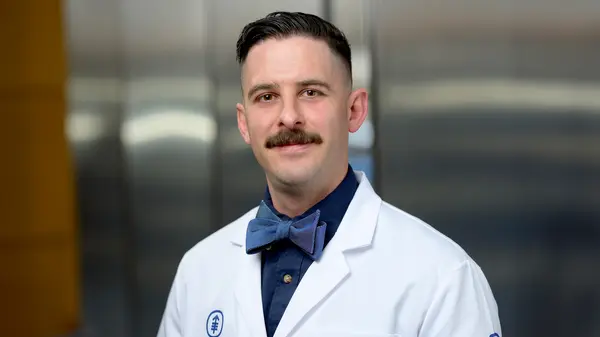
Nicholas Romano
Physician assistant

What is prostate cancer active surveillance like?
During active surveillance, you’ll have tests every few months to look for any changes in your prostate. You will also have regular follow-up appointments with your active surveillance APP.
You may also have genetic testing. Your care team will use the results from these tests to see if active surveillance is the right treatment for you.
There are 4 parts to active surveillance monitoring:
- A prostate biopsy
- Prostate magnetic resonance imaging (MRI)
- Prostate-specific antigen (PSA) blood testing
- A digital rectal exam (DRE)
| Appointment type | When | What to expect | |
|---|---|---|---|
| Your first visit in the program (welcome visit) | When you first start active surveillance | Meet your APP and learn about the program | |
| PSA blood test and APP visit | Every 6 months. If your PSA is higher than your last test, you may have to repeat your PSA test in 6 to 8 weeks. | Get your blood drawn for the PSA test and talk with your APP about the results | |
| Prostate MRI | Every 18 months. Your PSA results may change over time, or your MRI may not look normal. If so, we may move up your scheduled MRI, your surveillance biopsy, or both. | Get a prostate MRI | |
| Prostate biopsy | Every 3 years | Get a prostate biopsy | |
A prostate biopsy is a procedure to remove a small piece of tissue with a special instrument. The tissue sample or cells are examined under a microscope to look for cancer cells. You may have imaging during the biopsy.
Your sample is given a Gleason score or grade group score. This information tells your active surveillance care team how likely it is the cancer will grow.
A magnetic resonance imaging (MRI) scan gives us a very good view of the prostate. An MRI scan lets us see the type, size, and location of tumors. The MRI helps us see areas that do not look normal.
Your MRI may also show some changes to your prostate over time. This is normal. Your active surveillance care team will look for any major changes during your routine surveillance MRI. Based on your results, they may ask you to have a prostate biopsy earlier than your regular schedule.
This blood test measures how much PSA is in your blood. PSA is a protein made by cells in your prostate. PSA blood tests are done to check your levels to see if your cancer is growing or changing.
Your PSA levels will go up and down during active surveillance. This is normal. Your healthcare provider will monitor your levels and look for major changes over time.
Your APP will put a gloved finger into your rectum to feel your prostate. They’ll check for swelling, hardness, bumps, or other changes that are not normal.
A DRE test can be uncomfortable. You’ll feel a lot of pressure but not pain. The exam takes a few minutes.
They also may check other parts of your body for health problems that could be causing your symptoms.
Where does MSK offer prostate cancer active surveillance?
Active surveillance care is offered at MSK in Manhattan and at some of our other locations. Our program is based at MSK’s Sidney Kimmel Center for Prostate and Urologic Cancers at 353 E. 68th St.
We also offer PSA testing at our locations in New York and New Jersey. You can have your PSA blood tests every 6 months at a location that’s easiest for you. Talk with your care coordinator or office coordinator about scheduling.
We also offer telemedicine visits.
Every 6 months, you’ll have a visit with your APP. These will alternate between telemedicine visits and visits at MSK. Telemedicine visits connect you to your healthcare provider through your computer or smart device (smartphone or tablet).

Common questions about prostate cancer active surveillance
Yes. We understand you may be worried about living with prostate cancer, afraid it’s growing without you knowing. It’s important to remember it’s not likely to happen.
Research shows that active surveillance is a safe treatment for people with slow-growing prostate cancer. Your risk of dying from prostate cancer is just as low whether you choose active surveillance or a different treatment.
Your care team monitors the cancer closely. They look for important changes to your prostate. If the cancer grows or spreads, your care team will know in time to take action.
Yes. We cannot predict if you’ll have prostate cancer that gets worse or needs treatment. The chance is very low we’ll miss a change in the cancer if you follow your active surveillance schedule.
The regular prostate cancer monitoring schedule is:
- A PSA test every 6 months
- MRIs every 18 months
- Surveillance biopsies every 3 years
We may change this schedule if we see something in your PSA or MRI results. This is how we find cancer that’s growing.
No. It’s normal to have some problems with urinating (peeing) as you age. They’re not a sign of cancer.
More often, they’re signs of benign prostatic hyperplasia (BPH). BPH is caused by an enlarged (bigger) prostate and is not cancer.
Symptoms include leaking urine, urinating often, and not being able to empty your bladder all the way. Treatment can help with these symptoms.
There’s no normal PSA level, only a level that’s normal for you. We find that level by testing you every 6 months.
It’s also very normal for your PSA level to change. It can change from test to test, or even day to day, by as much as half.
A spike or change in your PSA most often is caused by inflammation (swelling), not cancer.
If there’s a big change, we’ll repeat the test in 6 to 8 weeks. Most often, the repeat test is closer to your normal range.
If your PSA rises slowly after many tests, we’ll decide if you need an early MRI to learn more.
It’s normal to worry with active surveillance. Research shows this feeling soon goes away.
Within 2 years of starting active surveillance, most people do not feel more worried than usual.
It’s also normal to worry about follow-up scan results.
It may also help to know you’re not alone. At MSK, more than 9 out of every 10 people with low-risk cancers choose active surveillance.
Many people feel that living with cancer gets much easier over time. MSK is here to help if you would like counseling at any time. Your care team can give you a referral to see a social worker, psychiatrist, or counselor.